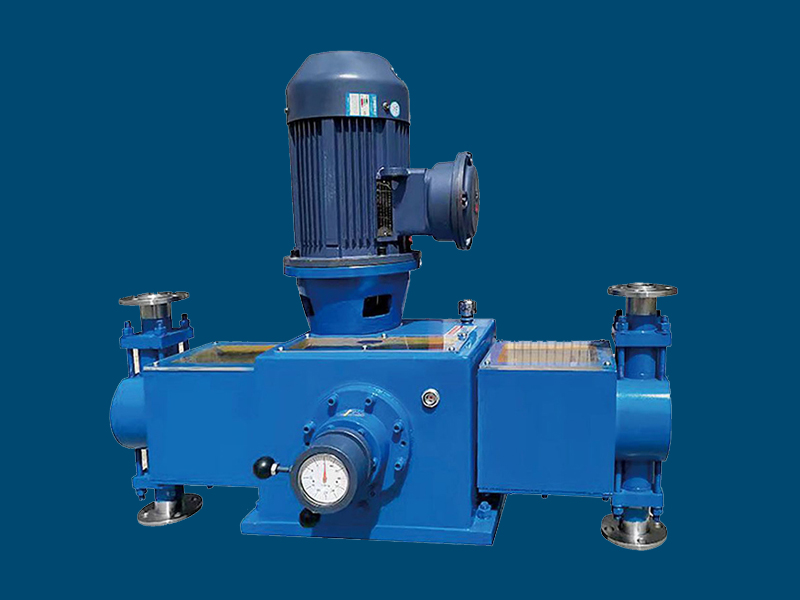
The diaphragm pump, also known as the control pump, is a type of transfer pump that transports liquid media through the movement of a diaphragm. It is mainly applied in the following fields:
Environmental protection field: It can be used for sewage treatment, sludge treatment, etc., and is capable of transporting sewage containing solid particles or suspended substances.
Water treatment field: Plays a role in processes such as water purification and seawater desalination. For instance, accurately adding chemicals to the water treatment system.
Chemical industry field: Suitable for transporting various corrosive, flammable and explosive, and toxic chemical liquids, such as strong acids, strong bases, organic solvents, etc.
Food sector: It can be used for transporting food raw materials, sauces, juices, etc., ensuring the hygiene and safety of the food. The parts in contact with liquids are made of materials that meet food hygiene standards.
Pharmaceutical field: During the pharmaceutical process, it is used to transport liquid medicines and pharmaceuticals, meeting the requirements of high precision and sterility.
Electronics field: It can transport some special electronic chemicals, such as photoresist.
Mining field: It is used for transporting slurries, tailings, etc., and can adapt to harsh working conditions.
Spraying field: Such as furniture painting, car painting, etc. It provides stable spraying pressure to ensure the spraying effect.
Advantages of diaphragm pumps:
1. No leakage: The diaphragm completely isolates the fluid from the pump body, enabling leak-free transportation. When handling toxic, corrosive, volatile liquids and liquid-solid mixtures, it can protect personnel safety and environmental health.
2. Applicable to various media: It can transport liquids, gases, high-viscosity liquids, and liquids containing solid particles, etc. It is widely used in fields such as chemical industry, food processing, and pharmaceuticals.
3. Strong self-priming capability: It has excellent self-priming performance and can achieve self-priming even under conditions of a large suction height, thereby reducing the need for auxiliary devices.
4. Stable transportation: The output of flow rate and pressure is relatively stable, and is not easily affected by external factors. It can maintain a relatively constant fluid transportation.
5. Strong adaptability: Capable of adapting to various working conditions and operation requirements, and able to adjust the flow rate and pressure as needed.
6. Simple structure, few vulnerable parts: This makes installation and maintenance extremely convenient.
7. Adjustable head and flow rate: Adjusted by the air source pressure.
8. Low shear force and excellent through-flow performance: It can pump liquids with particles and viscous substances.
9. It can operate in submerged environments, and it can also run in idle mode and perform dry suction without causing any damage. It can work in harsh environments such as those prone to fire and explosion.





 Home
Home